Table Of Content
- Royal Canadian Navy
- “Here Is What…Missiles Actually Costs” –The Drive
- Breaking Defense In your inbox
- Air Force Nuclear Cruise Missiles Seen Costing About $29 Billion
- Navigation
- Norway to host US Space Development Agency RF antenna, new Link 16 test: SDA director
- Cost Analysis of Cruise Missiles: A Look at the Price Tag
The Klub export variants all have their ranges downgraded to between 140 and 190 miles, so as to comply with the Missile Technology Control Regime, which forbids export of cruise missiles with ranges exceeding three hundred kilometers. Klub missiles are now deployed on Kilo-class submarines in the navies of China, India, Algeria, Vietnam and possibly Iran, as well as India’s six Talwar-class frigates. China also has developed the longer-range YJ-18 cruise missile, which is thought to be a partial copy of the Klub. Besides costs, the study also finds that there are operational obstacles to cruise missile defense of the homeland — such as the difficulty of rapidly distinguishing between incoming missiles and civilian aircraft. Another problem is the short time to find, track and respond to an incoming missile.
Royal Canadian Navy
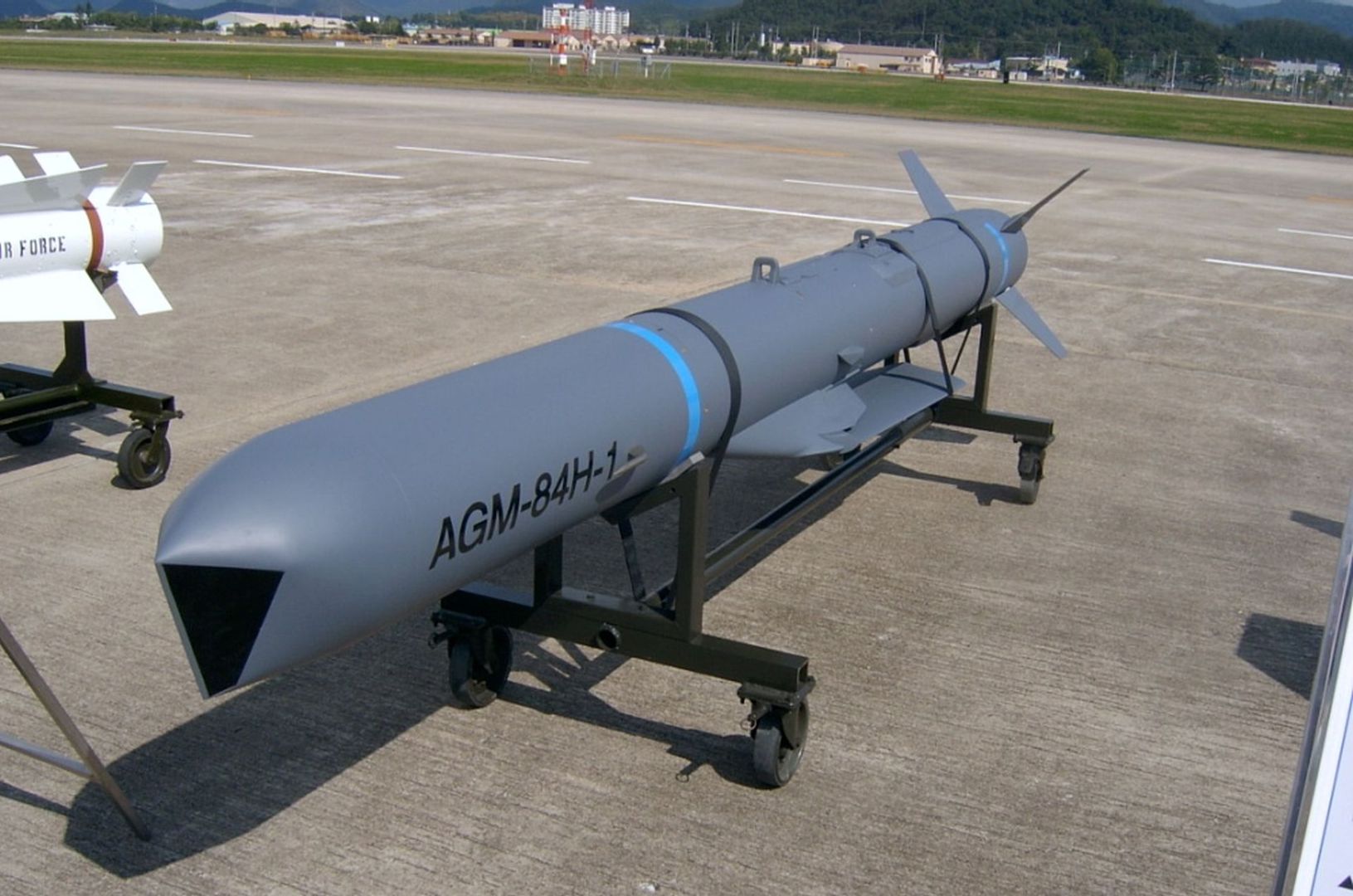
The desired range and price requirements are accompanied by NAVAIR’s ask for industry respondents who can produce “a minimum of 500” MACE missiles per year. This is likely well short of the quantities an effective long range air-launched cruise would generate in terms of demand. Current Air Force plans call for the procurement of about 1,000 new nuclear-capable missiles to replace the current fleet of AGM-86B missiles that have been operational since 1986. The service says a new ALCM is needed because the existing missiles are becoming increasingly difficult to maintain and are losing their ability to penetrate sophisticated air defenses. The new missile will be compatible with the B-52H and planned B-21 bombers.
“Here Is What…Missiles Actually Costs” –The Drive
According to budget data from the United States Marine Corps from 2022, each Tomahawk costs around $2 million. As of now, the United States and the United Kingdom are the only countries to deploy Tomahawk missiles, although Australia and Japan have put out bids to purchase Tomahawks. The Navy’s ask that MACE be able to carry a variety of interchangeable payloads and seekers points to multiple applications as well.
Breaking Defense In your inbox
The Tomahawk is designed to operate at very low altitudes while maintaining high-subsonic speeds. Its modular design enables the integration of numerous types of warheads, guidance and control systems. The Tomahawk Land Attack Missile (TLAM) can strike high-value or heavily defended land targets. The missile was first deployed in combat during Operation Desert Storm in 1991. L3Harris received $121 million on Jan. 14; and Northrop Grumman $155 million on Jan. 22.
Tomahawk (missile)
The Navy Wants A Cheap Long Range Cruise Missile - And Soon - Forbes
The Navy Wants A Cheap Long Range Cruise Missile - And Soon.
Posted: Thu, 29 Feb 2024 08:00:00 GMT [source]
Whoever that might include will have to assure enough capacity and do so quickly if MACE is to be fielded by Fiscal 2027 in both high numbers and at low cost per missile. The RFI indicates that the missiles will need to be compatible with external carriage on the F/A-18E/F Super Hornet as the “threshold platform”. They’ll need to fit with internal and external carriage options for the F-35A/C as well. Whether the industrial capacity to fulfill such additional weapons production is at hand is something NAVAIR told me it has yet to determine in response to a series of questions I put to the Command earlier this week. It is not clear whether the unplanned increase reflects the growth in the projected acquisition cost for the program, the acceleration of certain program activities, or both.
Air Force Nuclear Cruise Missiles Seen Costing About $29 Billion
WASHINGTON – The U.S. Navy test-fired its new Block V Tomahawk from the destroyer Chafee in December, introducing the newest generation of the venerable Tomahawk cruise missile to its arsenal. The Tomahawk missile itself is a 20.3 foot long craft with a wingspan of eight and a half feet, and it weighs 3,330 pounds with all of its components. It's powered by both a rocket booster and turbofan jet engine made by Williams International. According to PBS, the rocket booster engine launches the Tomahawk in the air (hence all the smoke you may see in news broadcasts or photos you see of the missile) and then its jet engine takes the missile the rest of the way to its target. Arming America’s fleet of fighting ships is an extremely expensive endeavor. The new Block V can run down enemy ships and blast them with a half-ton high explosive warhead.
Tactical Tomahawk (TACTOM) Block V – $1,537,645 (base land-attack variant). Conversion kits to transform Block V missiles in Block Va Maritime Strike Tomahawk (MST) anti-ship missiles approximately $889,681. On the other hand, Russia has demonstrated that it can use numerous small vessels to deploy a powerful long-range weapon, an example of a “distributed” force structure. The idea is that in an age of increasingly lethal and longer-range missiles, it may be wiser to spread out firepower across multiple smaller and expendable platforms, rather than put all the eggs in one large, expensive and vulnerable basket.
Norway to host US Space Development Agency RF antenna, new Link 16 test: SDA director
Thus, US “decisionmakers would need to consider whether the cost of a wide-area cruise missile defense was proportionate to the overall risk posed by LACM,” CBO says. Cruise missiles can be a valuable tool for militaries, providing precision strikes with minimal collateral damage. However, the cost of acquiring and launching cruise missiles can be significant, ranging from a few hundred thousand dollars for smaller models to over $10 million for larger, more advanced models.
In 1944, during World War II, Germany deployed the first operational cruise missiles. The V-1, often called a flying bomb, contained a gyroscope guidance system and was propelled by a simple pulsejet engine, the sound of which gave it the nickname of "buzz bomb" or "doodlebug". Accuracy was sufficient only for use against very large targets (the general area of a city), while the range of 250 km was significantly lower than that of a bomber carrying the same payload.
The impulse toward efficiency and cost consciousness in defense spending is important in spending taxpayer money effectively. However, the goal of the Department of Defense is not to have the most favorable accounting balance, but to provide a military capable of supporting U.S. national security priorities. Over the long term, the United States cannot afford to play catch against every Houthi missile attack in the Red Sea. Air defenses buy time to find another means to end the Houthi threat to shipping lanes. In this light, the important issue is not whether a single interceptor costs more than the missile it defeated, but rather whether those interceptors successfully allowed the United States to pursue its goals in the region effectively.

Costs for rebuilding would be significant for complete reconstruction, estimated to be as high as $12.6 trillion if hit by a missile with an 18Mt payload, based on the HE rebuilding costs. This page analyzes the destructive cost of different missile warhead payloads. It provides an estimated range of explosion with estimated medical, fiscal, and humanitarian costs for each of the payload types.
A missile with an anthrax payload would create a high-cost scenario in any environment. Raytheon planned to undertake recertification and modernisation programmes for Tomahawk Block IV missile in 2019 to add maritime strike capability and multiple-effects warhead upgrades to the missiles. After initial interest and planning (2005), the Dutch Ministry of Defence in 2023 confirmed ordering the ship launched- and submarine launched versions of the Tomahawk to be installed on both existing as well as future frigates & submarines. The United States has deployed nine nuclear cruise missiles at one time or another.

While the capabilities the Navy's array of ship-launched missiles provides are fairly well known, at least conceptually, the staggering cost of each of these weapons is not. Now, just as we did with air-launched weapons and decoy flares, we aim to change that. Despite its age, the Tomahawk has stayed in the game through a series of progressive upgrades. The original Block I version included both nuclear-tipped and anti-ship versions of the missile. Block II introduced land attack capabilities, like those demonstrated during the 1991 Gulf War, with missiles striking Iraqi Air Force airfields and daytime targets across the Iraqi capital of Baghdad. Block III added GPS, eliminating a time-consuming programming system that required 80 hours to plot a missile’s course as well as a loitering capability.
Four Ohio class nuclear ballistic missile submarines were converted into cruise missile submarines for firing Tomahawk missiles. The Virginia class submarines and the Royal Navy Astute class submarines were also fitted with new vertical launch modules for Tomahawk missile. The missile can be launched from over 140 US Navy ships and submarines and Astute and Trafalgar class submarines of the Royal Navy. All cruisers, destroyers, guided missile and attack submarines in the US Navy are equipped with a Tomahawk weapons system. The ABLs were also installed on eight Spruance-class destroyers, the four Virginia-class cruisers, and the nuclear cruiser USS Long Beach. The United States Air Force (USAF) deploys an air-launched cruise missile, the AGM-86 ALCM.
The Navy plans to cycle all of its Block IV cruise missiles through a mid-life “recertification,” during which Raytheon will add a new guidance system. No fewer than 89 Navy destroyers and cruisers plus 54 attack submarines and four guided-missile submarines are compatible with the 20-feet-long Tomahawk, the first model of which entered service in 1983. The U.S. Navy plans to upgrade a whole lot of Tomahawk land-attack cruise missiles. That’s $2 billion more than the service’s estimate, with the major difference stemming from the development and procurement phases for as many as 1,020 of the air-launched missiles, known as the Long-Range Standoff Weapon.
What is presented below are the unit costs, rounded to the nearest dollar, that the Navy expects to pay for these weapons in the 2021 Fiscal Year as they appear in the official budget documents. It's important to note that individual unit prices can vary from year to year due to a number of factors, including the economies of scale of placing larger or smaller orders. As such, the estimated price point for certain missiles may even be significantly different just between purchases made through the base budget and the supplemental Overseas Contingency Operations (OCO) budget. The Navy could fire them in combat as a sort of operational test “to demonstrate their capabilities,” Red said. According to an informed source, the Navy in December 2010 projected the total life-cycle cost of the Columbia-class program to be $342 billion in then-year dollars through the 2080s. The source said the Navy prepared a second life-cycle estimate in 2014 that put the cost at $282 billion.


No comments:
Post a Comment